Should you sleep on the plane or try to stay awake? Sleep expert says it depends

The stress of potentially facing a bout of severe jet lag after a flight can put a dampener on much of the pre-holiday excitement for some.
The internet offers up plenty of tips and tricks, with experts and seasoned travellers sharing their advice to beat the dreaded fatigue that comes as a side-effect of long-haul travel.
Recently, the world's first large-scale study on the topic even uncovered that your sleep quality can stay disrupted for a week or more.
READ MORE: The underrated Aussie town that's cheaper (and better?) than Byron

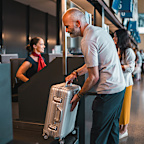
Is there anything we can do during or after a flight to help jet lag? Getty Images/iStockphoto
With this in mind, Martin Seeley, CEO and sleep expert at MattressNextDay, has answered some of the most commonly Googled jet lag questions to help you plan ahead.
What should I do if I arrive at night when it's already dark?
"Landing at night can actually work in your favour," Martin explains. "Once you arrive, keep things calm and dim the lights to help your body know it's time to wind down.

"Avoid screens and bright lights, which can trick your brain into thinking it's still daytime. Head straight to your accommodation and try to sleep as close to the local bedtime as possible.
"If you're not sleepy, don't stress-relax with a book or calming music in low light until you feel ready to nod off. Your body clock will start to adjust even if sleep doesn't come immediately."
READ MORE: The best time to go skiing in Australia this winter has been revealed

Jet lag is an unfortunate side effect of long haul travel for some. Getty
Should I sleep on the plane or try to stay awake?
"The answer depends on when you arrive. If your flight lands in the morning or early afternoon, getting some sleep on the plane will help you avoid exhaustion on arrival," Martin says.
"Use an eye mask, earplugs, and a travel pillow to make yourself comfortable.
"But if you're landing at night, try to stay awake for the last few hours of the flight to help you fall asleep once you get there. Sleeping at the right time on the plane is one of the best ways to reduce jet lag."

The question of whether to sleep on a plane depends on when you arrive, Martin says. Getty
Can I nap after arrival?
"Short power naps of 20 to 30 minutes can help if you're desperate," Martin advises.
"But avoid long naps that push your bedtime later. The goal is to stick as closely as possible to the local time, so your body clock adjusts faster and jet lag doesn't drag on."
Is jet lag worse when travelling east or west?
Scientists at the Centre of Sleep and Cognition at the NUS Yong Loo Lin School of Medicine in Singapore officially determined that jet lag hits us worst when we're travelling east.
Even travelling across just three time zones (like Perth to Sydney) can have an extreme impact on your sleep.
Our circadian rhythm, or body clock, tends to be less confused when we travel west, as this just 'prolongs' the experience of a normal day-to-night cycle.
When we travel eastward, we're going in the opposite direction to our body clock.