Andrew is still in the royal family's line of succession - for now. Here's what it would take for him to be removed

There is now growing speculation Andrew Mountbatten-Windsor could be removed from the British royal family's line of succession after his spectacular arrest overnight (AEST).
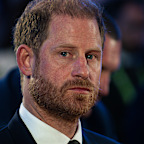
The former Prince Andrew currently remains in eighth place behind his nephew, The Prince of Wales and his three children, and Prince Harry, the Duke of Sussex, and his two children.
While his name was changed to Andrew Mountbatten-Windsor after his brother King Charles took action late last year to remove his "style, titles and honours" as a result of his links to convicted sex offender Jeffrey Epstein, he has remained in the line of succession.

Despite his arrest, Andrew retails his place in the line of succession, which came through his late mother. Getty
However, while many assumed the succession to the throne was a birthright, this is not the case, and it's not impossible his arrest could finally see his name stripped from the line-up.
All it would take is an Act of Parliament, followed by the consent of the heads of the 14 Commonwealth realms.
Most people assume the line of succession to the British throne is straightforward, with the eldest child of the current monarch next in line to the throne, and so on.
However, a little-known rule that is spelled out on the official website of the British Royal Family shows the succession to the throne is actually regulated by the British Parliament, and therefore could be used to stop someone from acceding to the throne.
READ MORE: What's next for Princesses Beatrice and Eugenie
READ MORE: Thing about Andrew's arrest that shocked me
READ MORE: King Charles reacts to Andrew's arrest
While Andrew is currently a distant eighth in line to the British throne, there are growing calls for him to be removed from the royal family's line of succession.
And while in the past it was largely assumed it was not possible, a look at the Act of Settlement confirms it is actually the UK Parliament that determines the line to the throne.
The British royal family's official website Royal.UK says succession to the throne is not only regulated through descent, but also by Parliamentary statute.
"The order of succession is the sequence of members of the royal family in the order in which they stand in line to the throne," the website states.
The basis for the succession was determined in the 17th century and culminated in the Bill of Rights (1689) and the Act of Settlement (1701).
"When James II fled the country in 1688, Parliament held that he had 'abdicated the government' and that the throne was vacant," the website states.
"The throne was then offered, not to James's young son, but to his daughter Mary and her husband William of Orange, as joint rulers.
"It therefore came to be established not only that the sovereign rules through Parliament, but that the succession to the throne can be regulated by Parliament.

Succession to the throne is not only regulated through descent, but also by Parliamentary statute. AP
"A sovereign can be deprived of his/her title through misgovernment."
With Andrew having been arrested on suspicion of misconduct in public office, this could be the catalyst for Parliament to act.
And there is growing speculation it will.
The UK's Prime Minister Keir Starmer, speaking just prior to Andrew's arrest, said "nobody is above the law" when asked about the royal, who has faced a growing backlash over his links to convicted sex offender Jeffrey Epstein.
The PM told BBC Breakfast "one of the core principles in our system is that everybody is equal under the law and nobody is above the law".

The British royal family's line of succession as it now stands. Graphic: Polly Hanning
"It's a very important principle of our country... and it has to apply in this case in the same way it would in any other case."
He also said if MPs in Parliament wanted to debate Andrew's links to Epstein, he "wouldn't stand in the way".
While Starmer previously ruled out using Parliamentary time to change the law, some MPs are calling for action.
Labour MP Rachael Maskell told the BBC earlier this week that Andrew should also be stripped of his role as a counsellor of state, which would allow him to make decisions on behalf of the monarch if they are unavailable.

Andrew was stripped of the title of Prince in 2025. Samir Hussein/WireImage
Thames Valley Police arrested Andrew on Thursday morning on suspicion of misconduct in public office, taking him into custody at 8am local time on what was his 66th birthday.
Police arrived at Wood Farm, once the bolthole of his father Prince Philip, on King Charles's Sandringham estate, in a convoy shortly before making the arrest.
An image of a shocked Andrew, slumped in the back of a police car, has now been beamed around the world.
FOLLOW US ON WHATSAPP HERE: Stay across all the latest in celebrity, lifestyle and opinion via our WhatsApp channel. No comments, no algorithm and nobody can see your private details.
Most viewed in Royals
Fresh blow for Prince Harry days after King’s letter clarifying his and Meghan’s royal status
Harry hasn’t spoken to king since return, takes issue with ‘private citizens’ wording
Royals make first balcony appearance after king’s funeral as Marius Borg Høiby’s inclusion draws attention
King Harald V of Norway laid to rest in royal-filled ceremony in Oslo